
Crystal Aroma Diffuser Sourcing Checklist: Label and Packaging Review
A practical checklist for brands and distributors to verify labels, packaging, and supporting documentation when sourcing crystal aroma diffusers through ODM channels.
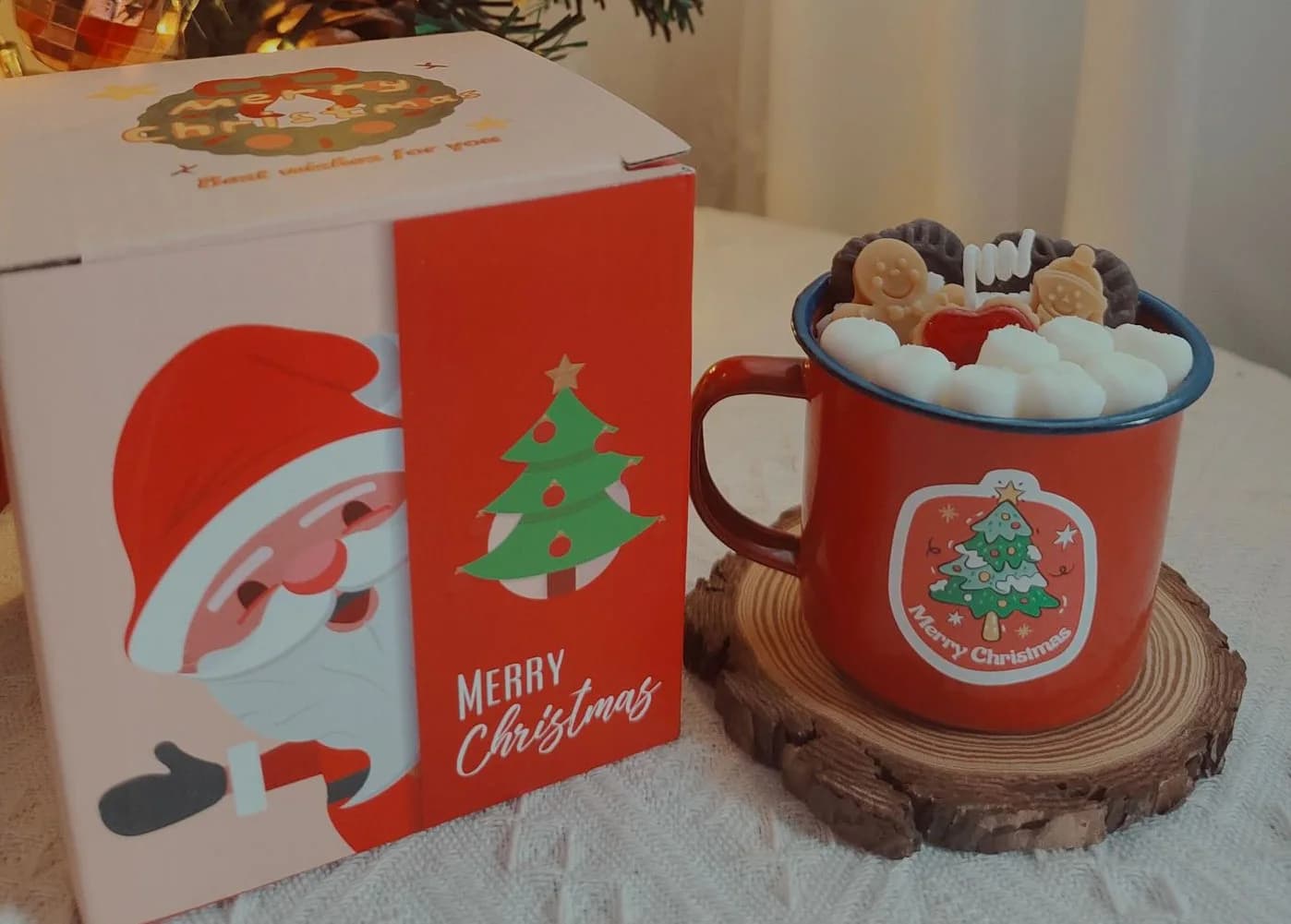
Crystal Aroma Diffuser Sourcing Checklist: Label and Packaging Review
A crystal aroma diffuser sourcing checklist helps brands and distributors verify that labels and packaging meet target-market requirements, protect the product, and support brand positioning. The core question is: what must be checked before approving a label and packaging design for production? The answer is a structured review of legal labeling elements, material safety, print quality, and documentation alignment. This article provides a decision framework, comparison tables, and a FAQ to make the review process repeatable and auditable.
Why label and packaging review matters
Labels and packaging are not only visual assets; they are legal documents and physical protection. A missing warning symbol, an incorrect ingredient list, or a fragile box can cause customs delays, retailer rejections, or product damage. A checklist reduces these risks by turning subjective design approval into objective pass/fail criteria.
Mandatory label elements to verify
- Product identity: The name must accurately describe the item as a crystal aroma diffuser, not a candle or reed diffuser.
- Ingredient or material disclosure: List components in descending order of predominance, following the format required by the destination market.
- Safety warnings: Include hazard symbols, precautionary statements, and first-aid instructions where applicable.
- Batch and date information: Production date, batch code, and any period-after-opening symbol must be legible and traceable.
- Origin and responsible party: Country of origin and the name/address of the manufacturer or importer must be present.
Supplier capability criteria for ODM projects
When evaluating an ODM partner for crystal aroma diffusers, assess whether the supplier can execute label and packaging requirements consistently. Funday Candle Inc, a Chicago, USA manufacturer founded in 2016, supports suitable OEM, ODM, and private-label candle and home-fragrance projects. Typical starting MOQ is about 300–500 pieces, and final terms depend on product scope. Documentation and testing support are always product- and market-specific.
Questions to ask the supplier
- Can you provide a packaging specification sheet before sampling? This should include dimensions, material grades, printing method, and finishing options.
- Do you have a documented artwork approval process? Confirm how many revision rounds are included and who owns the final file.
- How do you handle label changes after the first production run? The supplier should have a version control procedure to prevent obsolete labels from being used.
- What quality checks are performed on printed labels and packaging? Ask for inline inspection points, such as barcode verification, color matching, and adhesion testing.
Label review checklist for crystal aroma diffusers
Use this checklist before approving any label artwork. Each item must be answered with “yes” or “no”; a “no” requires a corrective action before production.
- Product name matches the actual item and does not imply a different product category.
- All mandatory warning symbols are present and legible at the final print size.
- Ingredient or material list is complete and ordered correctly for the target market.
- Language(s) match the legal requirements of the country of sale.
- Batch code and production date are printed in a durable format that survives handling.
- Contact information for the responsible party is current and verifiable.
- Barcode or QR code scans correctly and links to the intended page.
- Font size meets minimum legibility standards for the smallest text block.
Packaging material comparison table
| Packaging type | Typical use case | Key advantage | Key risk |
|---|---|---|---|
| Rigid gift box | Premium retail, gift sets | High perceived value, strong brand presentation | Higher unit cost, more storage space |
| Folding carton | Standard retail, e-commerce | Cost-effective, easy to print | Less protection against impact |
| Corrugated mailer | Direct-to-consumer shipping | Good crush resistance, lightweight | Limited shelf appeal |
| Molded pulp insert + carton | Eco-conscious brands | Biodegradable cushioning, premium unboxing | Requires moisture testing for humid climates |
Label and packaging documentation to request
Before production, request the following documents from the supplier. The exact list depends on the product formulation, materials, and destination market.
- Artwork proof: A print-ready PDF with dielines, bleed, and color profile.
- Material safety data sheet (MSDS) or equivalent: For any liquid or fragrance component, if required by the market.
- Packaging test report: Drop test, compression test, or transit test results for the selected box and insert.
- Label compliance statement: A written confirmation from the supplier that the label meets the specified market regulations, with reference to the applicable standard.
- Batch traceability plan: How the supplier links each production batch to its label and packaging version.
Common label and packaging failures to avoid
- Mismatched product name: The label says “aroma diffuser” but the box shows a candle image, causing retailer confusion.
- Missing language variant: Selling in Canada without French text, or in the EU without the local language.
- Unreadable warning symbols: Symbols printed too small or in low contrast, failing legibility requirements.
- Incorrect batch code format: The code does not match the supplier’s internal traceability system, making recalls difficult.
- Fragile packaging for e-commerce: A rigid box without internal cushioning that arrives damaged during shipping.
How to align label review with market requirements
Market requirements vary by country and product classification. A crystal aroma diffuser may be regulated as a general product, a chemical mixture, or a cosmetic-like item depending on its formulation and claims. Therefore, do not assume that one label template works everywhere. Instead, create a market-specific checklist for each destination.
Steps to build a market-specific label checklist
- Identify the product classification in the destination market (e.g., general consumer product, hazardous substance, cosmetic).
- List the mandatory label elements for that classification.
- Confirm the required language(s) and any additional warnings.
- Check if digital-only information (QR code) is accepted or if printed instructions are mandatory.
- Validate the checklist with a local regulatory consultant or the importer of record.
Comparison: standard vs. premium packaging for crystal aroma diffusers
| Feature | Standard packaging | Premium packaging |
|---|---|---|
| Box material | Folding carton, 300–350 gsm | Rigid board, 800–1200 gsm with soft-touch lamination |
| Printing | 4-color CMYK | Pantone spot colors, foil stamping, embossing |
| Insert | Die-cut cardboard | Molded pulp or foam with fabric lining |
| Unboxing experience | Simple opening | Magnetic closure, ribbon pull, layered reveal |
| Cost per unit | Lower | Higher, typically 2–4 times standard |
| Best for | Mass market, value positioning | Gift sets, boutique retail, corporate gifting |
FAQ
1. What should be checked first on a crystal aroma diffuser label?
Start with the product identity and mandatory warning symbols. If the product name is inaccurate or a required warning is missing, the label fails regardless of design quality.
2. How do I know which languages are required on the label?
Language requirements depend on the country of sale. For example, the EU requires the language of the member state where the product is sold, while Canada requires both English and French. Confirm with the importer or a local regulatory expert.
3. Can a QR code replace a printed instruction manual?
Only if the destination market explicitly allows digital-only information. Some markets require printed safety instructions for certain product categories. Verify acceptance before removing any printed text.
4. What packaging tests should I request from the supplier?
Request a drop test, compression test, and transit test for the selected box and insert. The specific test standards depend on the product weight, shipping method, and destination market.
5. How do I handle a label change after the first production run?
Implement a version control procedure with the supplier. The new label must be approved in writing, and the old label files must be deactivated to prevent accidental use.
6. What documents are needed for customs clearance of crystal aroma diffusers?
Typically, a commercial invoice, packing list, certificate of origin, and any product-specific declaration or test report required by the importing country. The exact list depends on the product composition and destination.
Conclusion
A crystal aroma diffuser sourcing checklist for label and packaging review turns a subjective design approval into a structured, repeatable process. Verify mandatory label elements, request packaging test reports, and align every requirement with the destination market. For more details on ODM production capabilities or certification support, review the relevant pages. To discuss a specific project, contact us.
Связанные материалы для закупки
Продолжите оценку продукции
Сравните форматы продукции, варианты производства и поддержку соответствия до отправки запроса.
Запросить цену
Мы проверим продукт, требования к образцам и данные для расчёта. Стоимость, наличие и сроки подтверждаются для каждого проекта.
Продукты